

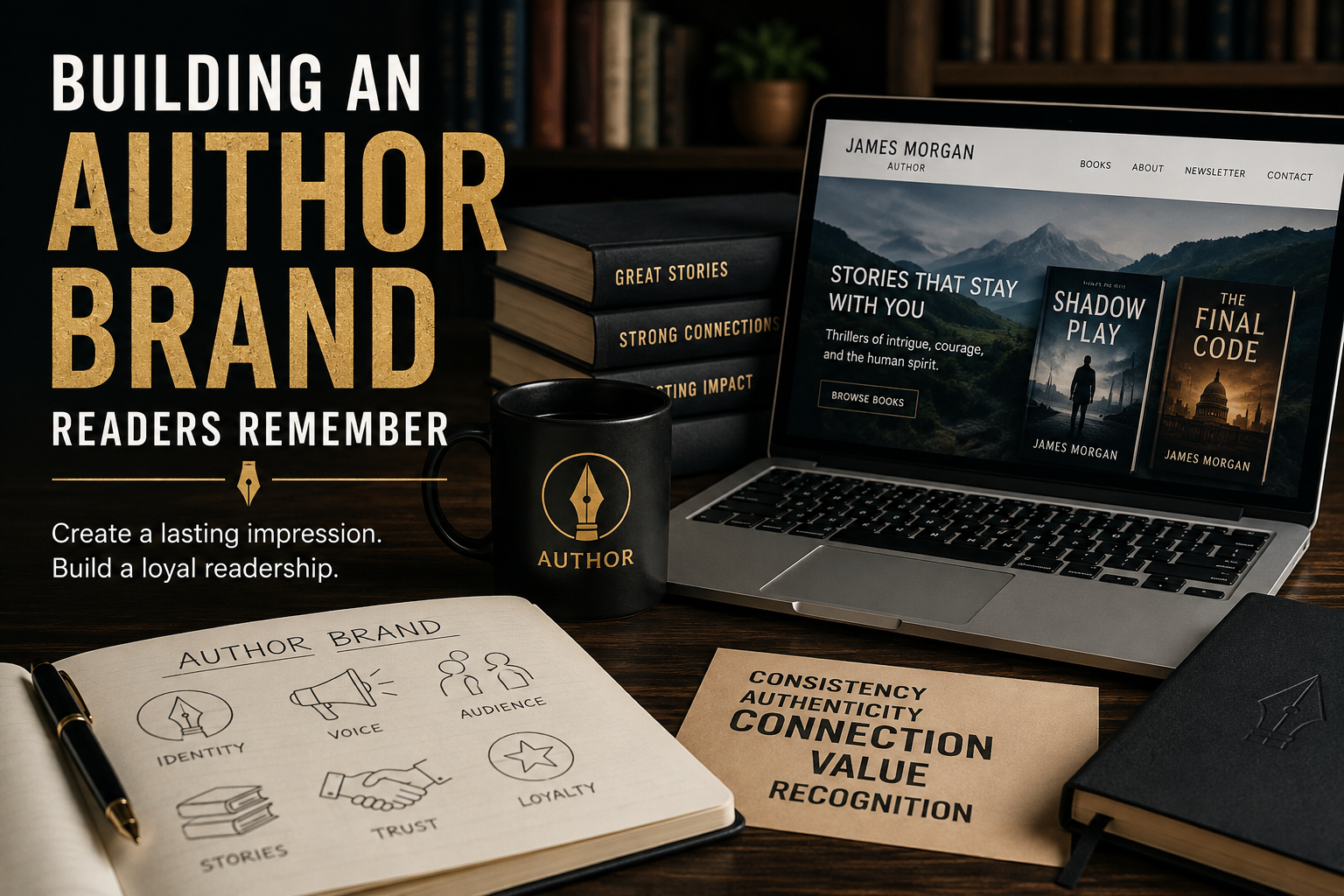
Writing a good book is difficult. Getting readers to remember who wrote it can be even harder.
Thousands of new novels reach the market every month, competing not only with other new releases but with decades of established books, streaming entertainment, social media, podcasts, games, and everything else demanding a reader’s attention.
For an author, that makes brand recognition increasingly important.
An author brand is not simply a logo, a color palette, or a professional photograph. It is the collection of impressions readers associate with your name. Your books, covers, website, genre, voice, subject matter, email communications, and visual presentation all contribute to it.
The objective is simple:
When readers encounter your name again, they should recognize it.
For independent authors in particular, a strong brand can turn one book purchase into a long-term relationship with a reader.
Your Name Is the Brand
Publishers market individual books. Authors should think beyond individual books.
A book may attract a reader initially, but the long-term asset is the author’s name.
Consider what happens when someone enjoys a thriller and immediately searches for another book by the same author. The reader may remember the title. They may remember the cover. Ideally, however, they remember the author’s name.
That is why successful author branding begins with consistency.
Your name should appear prominently and consistently across:
- Book covers
- Your author website
- Retailer author pages
- Email newsletters
- Social media profiles
- Advertising
- Promotional graphics
- Book launch materials
If you write under a pen name, consistency becomes even more important. The pen name is effectively the public identity of the publishing business.
The goal is to make each encounter reinforce the previous one.
Start With a Clear Position
Before designing logos or selecting colors, answer a more important question:
What should readers expect when they see your name?
A spy thriller author might promise intelligence operations, geopolitical conflict, surveillance, betrayal, and clandestine tradecraft.
A cozy mystery author creates very different expectations.
So does a romance novelist, historical fiction writer, or science-fiction author.
You do not need to restrict every future book to an identical formula. But readers should have some understanding of the experience associated with your work.
This is positioning.
A useful exercise is to complete this sentence:
Readers who enjoy my books can expect __________.
If the answer requires several paragraphs, the brand probably needs greater focus.
Build a Recognizable Visual Identity
Visual branding helps readers make connections before they read a single word.
That does not mean every book cover should look identical. It means your visual presentation should feel related.
A basic author identity usually includes:
Typography. Select fonts or font styles that fit your genre and use them consistently in marketing materials.
Colors. Establish a limited palette that appears repeatedly on your website, email graphics, promotional materials, and social profiles.
Author photography. Use a professional image appropriate to the type of books you write.
Logo or author mark. A simple wordmark, monogram, symbol, or stylized version of your name can provide another recognizable visual element.
Book presentation. Books within the same series should normally have an obvious visual relationship.
Consistency matters more than complexity.
Readers do not need to consciously recognize your fonts or identify the precise shade of blue used on your website. Repeated visual cues simply make your identity increasingly familiar.
Your Book Covers Are Part of Your Brand
For many readers, a book cover will be their first encounter with an author.
That makes cover design both a sales tool and a branding tool.
A strong cover immediately communicates genre. A thriller should look like a thriller. A historical romance should not accidentally resemble a business book.
Series branding is especially important.
Books belonging to the same series should look like members of the same family through typography, composition, colors, imagery, title treatment, or another repeated design element.
This has a practical marketing benefit.
If a reader enjoyed Book One and encounters Book Three months later, the visual connection can trigger recognition before the reader even notices the author’s name.
That is branding working exactly as intended.
Make Your Author Website the Center of the Brand
Social platforms are useful, but they are rented space.
Your author website is different.
You control the presentation, content, visitor experience, and relationship with your readers.
A professional author website should quickly answer several questions:
Who are you?
What do you write?
What books are available?
Where can readers buy them?
What should a visitor do next?
For many authors, that final question should lead to an email signup.
Your website can bring together your biography, books, series information, reviews, blog articles, media appearances, reader resources, direct sales, and newsletter.
Most importantly, it gives your brand a permanent home.
Social networks may change their algorithms, advertising rules, reach, or even their relevance. Your domain remains yours.
Build an Email List, Not Just a Following
A social media follower and an email subscriber are not the same thing.
Social platforms determine whether followers see your posts. Email provides a much more direct connection.
That makes an email list one of the most valuable assets an author can build.
The objective should not be to send constant sales messages. Your emails should strengthen the relationship readers already have with your books and your author identity.
Depending on your genre and audience, emails might include:
- New release announcements
- Cover reveals
- Research stories
- Character profiles
- Deleted scenes
- Short fiction
- Reading recommendations
- Behind-the-scenes material
- Upcoming appearances
- Subscriber-only offers
Every email provides another opportunity for readers to encounter your name and remember why they subscribed.
Over time, familiarity compounds.
Be Consistent Without Becoming Repetitive
Consistency does not mean publishing the same message everywhere.
It means maintaining the same identity.
Your website might contain a detailed article about researching intelligence tradecraft for a novel. Your newsletter might tell a shorter story about that research. A social post might feature a photograph or quotation related to it.
Different content. Same author. Same world.
This approach is more sustainable than attempting to manufacture unrelated content simply because a particular platform demands frequent posting.
Your marketing should reinforce your writing rather than become a second career competing with it.
Give Readers Something to Remember
The strongest brands usually have distinctive elements.
For an author, that distinction might come from subject matter, expertise, setting, recurring characters, tone, visual style, or the fictional world surrounding the books.
A former intelligence officer writing espionage novels has an obvious point of distinction.
So does an author specializing in Cold War Berlin.
Or political thrillers centered on Washington.
Or historical mysteries set in Victorian London.
The narrower the initial association, the easier it often is for readers to remember.
You can expand later.
Being known for something is usually more valuable than trying to be known for everything.
Your Brand Includes the Reader Experience
Branding does not stop with design.
A poorly functioning website communicates something about an author.
So does an unanswered reader email.
So does a confusing purchasing process.
So does a newsletter that arrives five times in one week and disappears for six months.
Every interaction contributes to the reader’s perception of your author brand.
Professionalism therefore becomes part of branding.
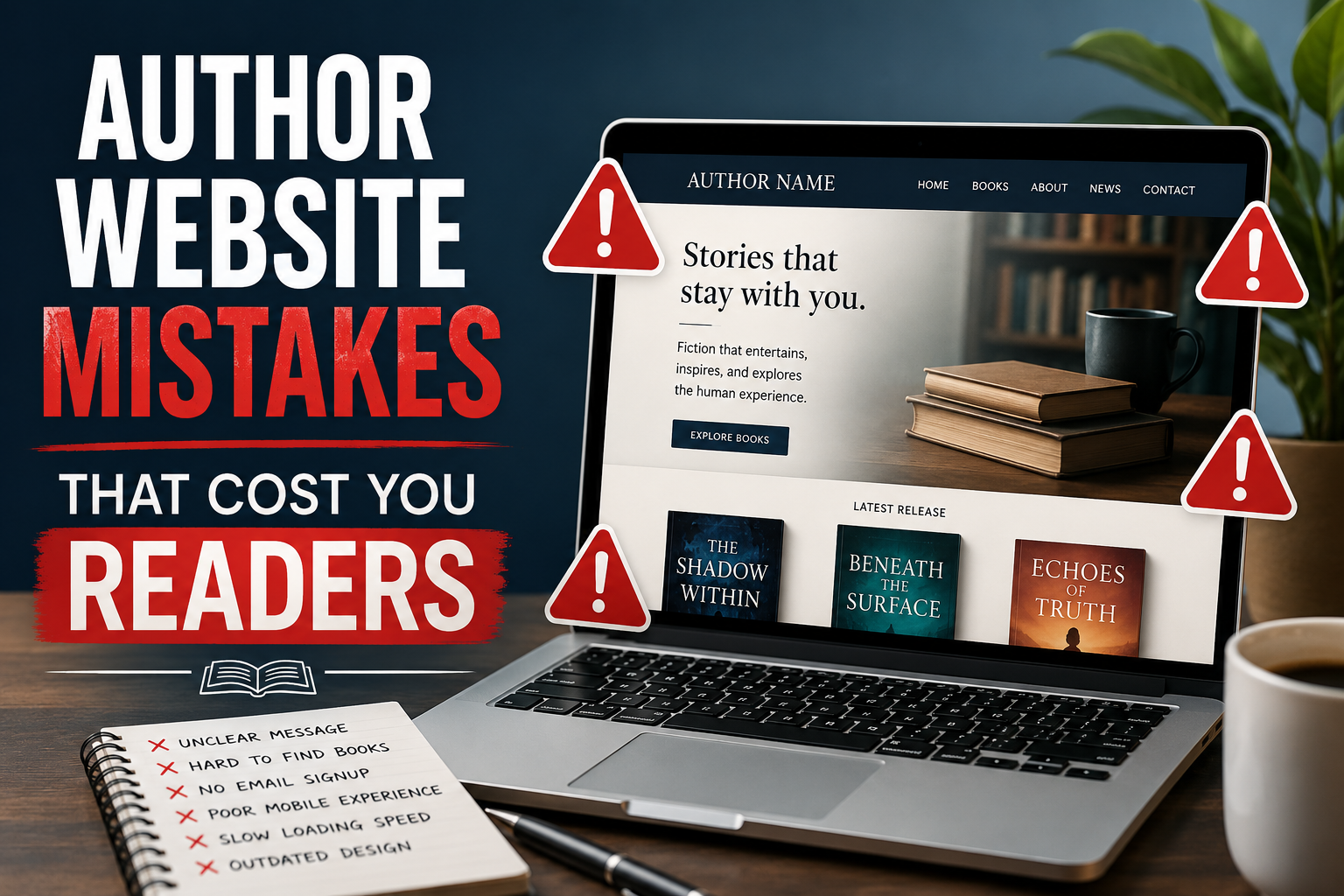
Your website should work properly on a phone. Links should work. Books should be easy to find. Purchasing options should be obvious. Email signup should be simple. Communications should look professional.
None of these things individually creates an unforgettable author brand.
Together, they create trust.
Don’t Try to Be Everywhere
One of the easiest ways for authors to exhaust themselves is trying to maintain an active presence on every new platform.
You probably don’t need to.
A better foundation is:
A professional website + an email list + selected channels where your readers actually spend time.
An author writing for professionals in their fifties may require a different marketing mix from an author targeting twenty-year-old fantasy readers.
Choose channels based on readers, not headlines about the latest platform.
Then make those channels work together.
Social media can introduce readers to you.
Your books can bring them to your website.
Your website can turn visitors into subscribers.
Your newsletter can bring subscribers back for the next book.
That is far more valuable than accumulating disconnected followers.
Branding Takes Repetition
Most people will not remember an unfamiliar author’s name after seeing it once.
Recognition develops through repeated exposure.
A reader sees a cover.
Later, they encounter an advertisement.
Then they see a recommendation.
They visit the author’s website.
They subscribe to an email list.
Months later, they see the next book.
Now the name is familiar.
This is one reason author branding should begin early. You are not designing a campaign for a single launch. You are creating an identity that can support multiple books over many years.
Every book makes the brand stronger, provided the pieces work together.
Build an Asset That Outlives Any Single Book
Books have sales cycles.
An author brand can have a much longer life.
A novel may receive its greatest attention during the months surrounding its release, but readers who discover and remember the author can return for the next book and the one after that.
That changes the economics of publishing.
Instead of starting from zero with every release, you begin with readers who already know your name.
Your website has visitors.
Your email list has subscribers.
Your previous books provide discovery points.
Your visual identity is recognizable.
Your reputation has begun to accumulate.
That is the real value of author branding.
The objective is not to turn a novelist into a corporate logo.
It is to make sure that when someone finishes your book and thinks, “I want to read another one,” they remember exactly whose name to search for.
Your books create readers. Your brand helps bring them back.
 Create a professional Flash Author Site built specifically for authors.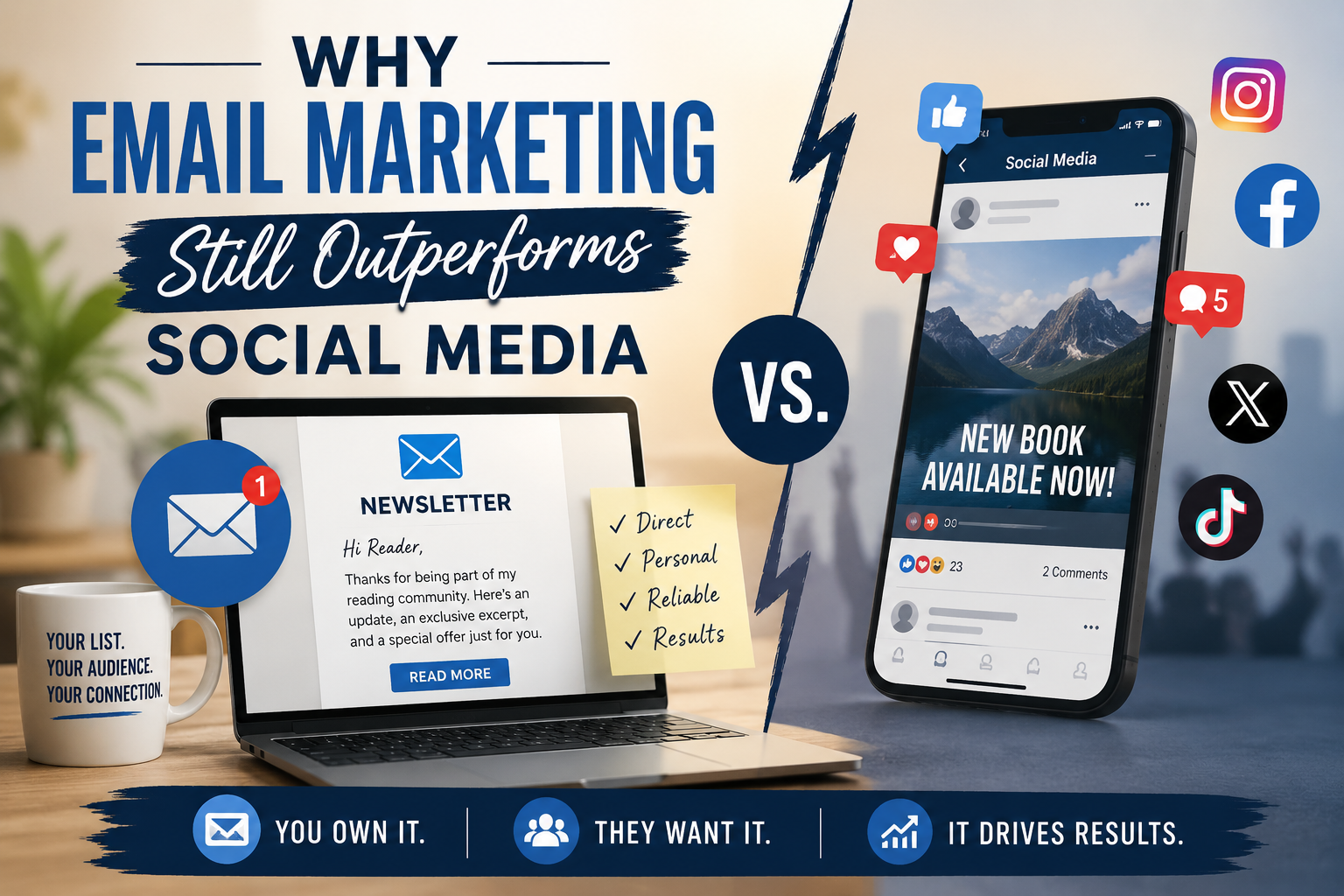


 Your books. Your brand. Your readers. One professionally managed author website.