

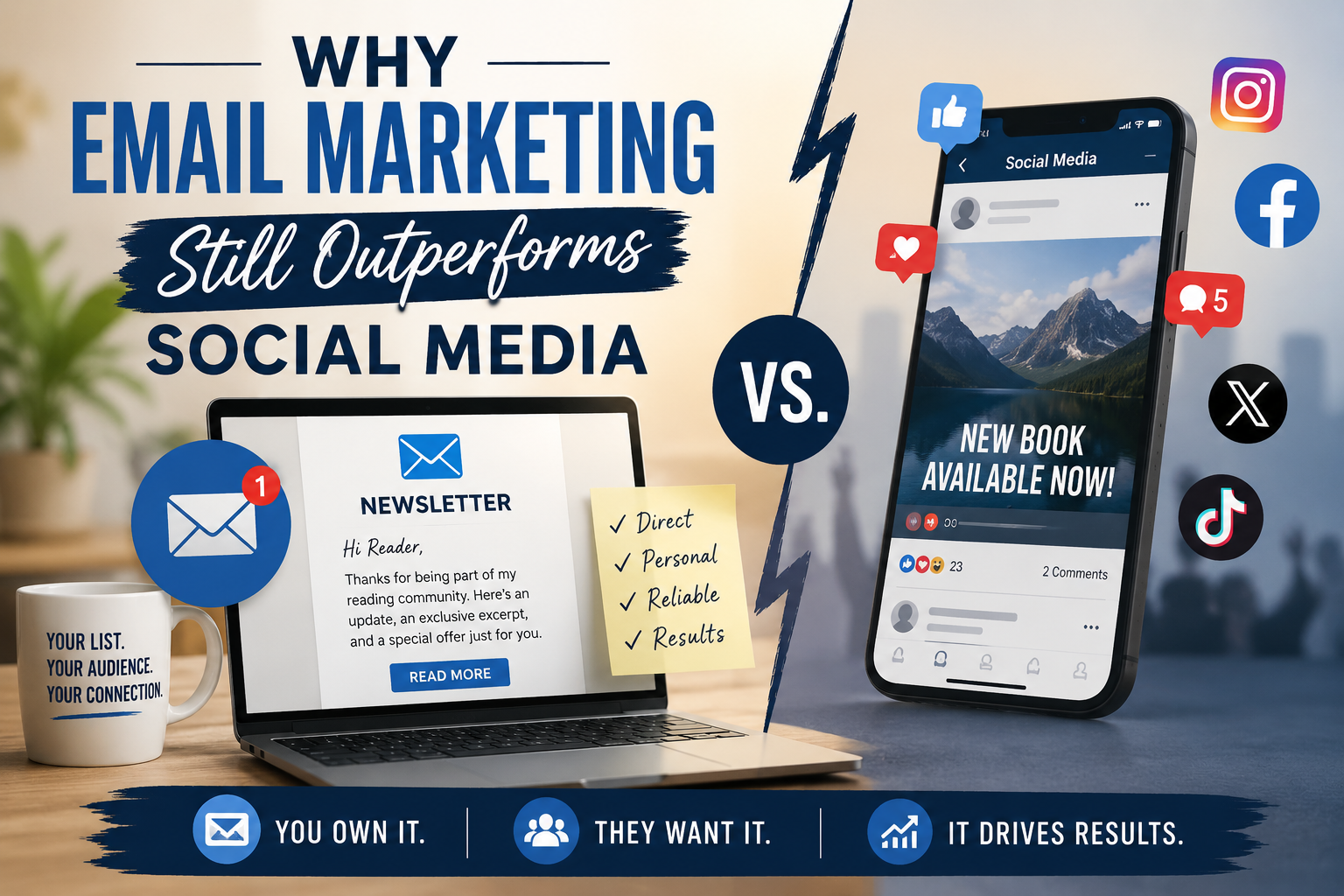
Social media gets most of the attention in book marketing. Authors are told to post regularly, build followers, create videos, join conversations, and hope that enough activity eventually translates into book sales.
Social media can certainly help an author become more visible. But visibility and a dependable marketing channel are not the same thing.
For authors who want to build a lasting audience, launch books effectively, and generate repeat sales, email remains one of the most valuable marketing tools available.
The reason is simple: social media gives you access to someone else’s audience. Email helps you build your own.
Social Media Followers Are Rented
An author can spend years building thousands of followers on Facebook, Instagram, TikTok, X, Threads, or another platform. But those followers do not belong to the author.
The platform controls the relationship.
It determines which posts appear in a reader’s feed, how frequently they appear, which formats receive priority, and whether an author must pay to reach people who have already chosen to follow them.
Algorithms change. Organic reach rises and falls. Platforms gain and lose popularity. Accounts can be restricted or suspended. Features disappear.
An author may have 10,000 followers and still reach only a fraction of them with a particular post.
An email list works differently.
When readers voluntarily subscribe, the author has established a direct communication channel with them. The author can send a message without waiting for an algorithm to decide whether it deserves distribution.
That distinction becomes increasingly important as an author’s career grows.
Email Reaches Readers Who Have Already Raised Their Hands
A social media follower may have followed an author because of a funny post, a giveaway, a recommendation, or even by accident.
An email subscriber has taken a more deliberate action.
The reader provided an email address and asked to hear from the author again.
That makes an email list an opt-in audience.
For a spy thriller author, those subscribers might have joined after downloading a short story, reading a novel, entering a giveaway, attending an event, or visiting the author’s website.
Whatever brought them there, they have demonstrated interest beyond simply scrolling past a post.
That makes the relationship particularly valuable when the author has something important to announce.
The Difference Becomes Obvious During a Book Launch
Consider what happens when a new novel is released.
On social media, the author publishes:
My new book is available today.
Some followers see the announcement. Many do not.
The author posts again.
Perhaps the second post reaches a somewhat different group. Perhaps it does not.
Now compare that with an email list.
The author can build a launch sequence weeks before publication.
Subscribers might receive:
Three weeks before release:
Cover reveal and announcement.
Two weeks before release:
Story background or character introduction.
One week before release:
Excerpt or advance review.
Release day:
The book is now available.
Several days later:
Reviews, reader reactions, or a reminder.
Instead of hoping readers happen to encounter a social post, the author has created a planned communication campaign.
That is marketing infrastructure rather than isolated promotion.
Email Is Particularly Powerful for Fiction Authors
Most authors do not have something new to sell every week.
A novelist might release one or two books a year.
That creates a problem for marketing.
If readers disappear after buying the first book, the author must effectively find them again when the next book is published.
Email changes that equation.
A reader who discovers an author’s first novel can remain connected for years.
Between releases, the author can share occasional updates such as:
- new book announcements
- cover reveals
- excerpts
- short stories
- research behind a novel
- character features
- reading recommendations
- appearances or events
- special editions
- direct-sale offers
The objective is not constant promotion. It is maintaining a connection so the author does not have to rebuild an audience every time a new book is released.
Your Website and Email List Should Work Together
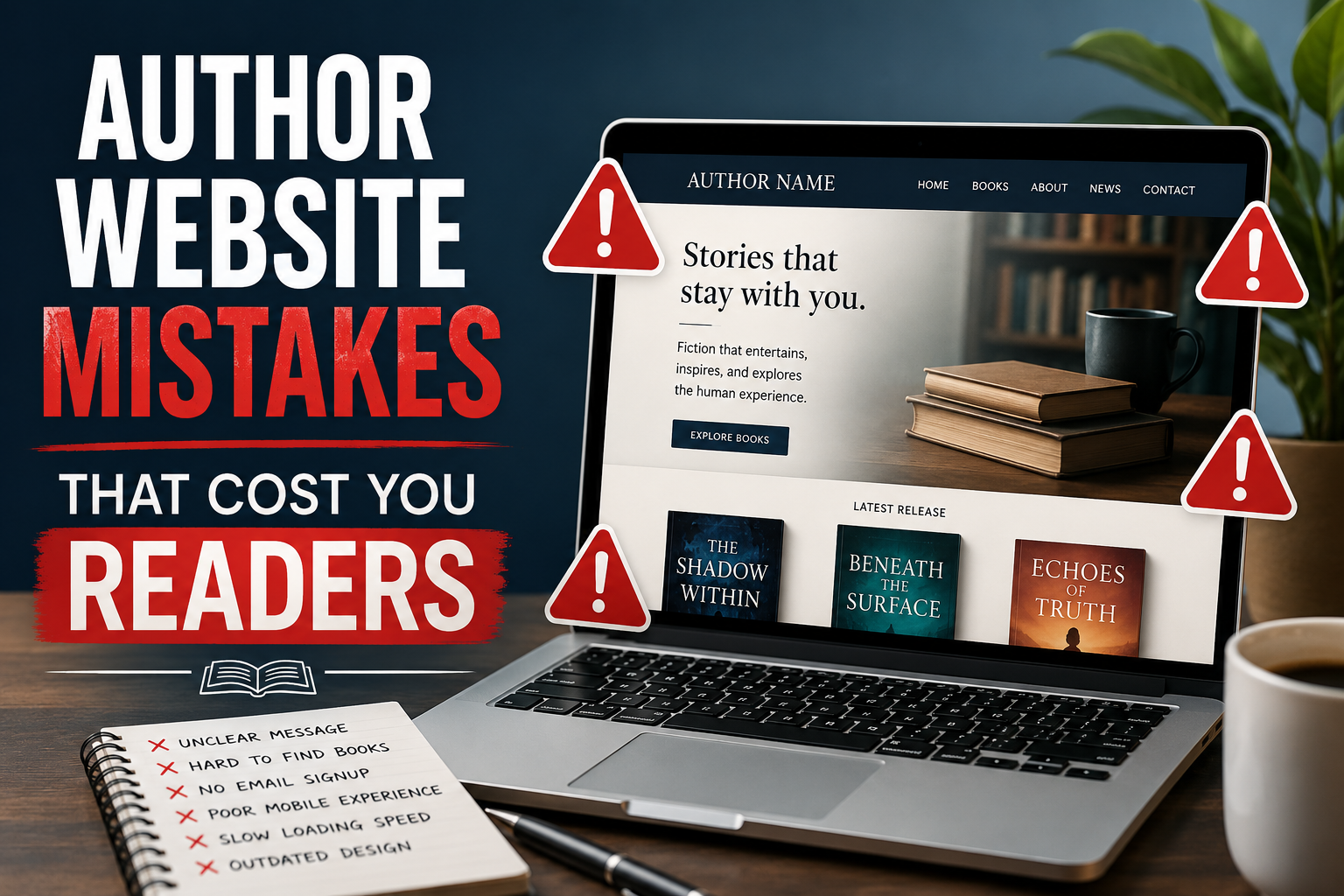
This is why an author website should do more than display book covers and an author biography.
It should convert visitors into subscribers.
A reader might arrive after searching for an author’s name, clicking a link in a book, reading an interview, scanning a QR code, or following a social media post.
The website should give that reader a reason to stay connected.
For fiction authors, one of the most effective incentives is something related to the books themselves.
For example:
Join my intelligence briefing and receive a free Watchtower short story.
The reader receives something immediately. The author gains permission to continue the relationship.
That exchange can be considerably more valuable over time than another social media follower.
Email Can Be Automated
One of the biggest misconceptions about email marketing is that it creates another endless task for authors.
Much of it can be automated.
Suppose a reader visits an author’s website and subscribes to receive a free short story.
An automated sequence might then send:
Email 1: Deliver the promised story.
Email 2: Introduce the author and the series.
Email 3: Recommend the best book to read first.
Email 4: Introduce important characters or the fictional world.
Email 5: Invite the reader to purchase the next book.
The author creates the sequence once.
Every new subscriber can then receive the same carefully planned introduction automatically.
Instead of manually marketing to one reader at a time, the author’s website and email system work together continuously.
Email Supports Direct Book Sales
Email becomes even more important when an author sells books directly from an author website.
Traditional online booksellers provide enormous distribution, but the retailer owns most of the customer relationship.
The author may know that a book sold without knowing who purchased it.
Direct sales can change that relationship.
With the proper permissions and systems in place, an author can turn a customer into a continuing reader relationship.
That means a direct sale can become more than a single transaction.
A reader buys Book One.
Later, the author announces Book Two.
Then a boxed set.
Then a signed edition.
Then the next series.
The lifetime value of a loyal reader can be far greater than the revenue from the first book purchased.
Email provides the communication channel that makes that relationship possible.
Email Is Measurable
Social media statistics often emphasize activity:
Followers.
Likes.
Shares.
Views.
Impressions.
Those numbers can be useful, but they do not necessarily indicate purchasing intent.
Email marketing can be tied much more directly to actions.
Authors can measure deliveries, opens, clicks, subscriptions, unsubscribes, and conversions. With a properly configured website, they can also determine which campaigns produce sales.
That allows an author to answer practical questions.
Did readers click the preorder link?
Did the free short story generate subscribers?
Did the launch email produce sales?
Did readers respond better to an excerpt or a cover reveal?
Marketing becomes something that can be tested and improved rather than simply repeated.
Email and Social Media Should Not Be Competitors
None of this means authors should abandon social media.
Social media is useful for discovery.
Email is better suited to relationship building and conversion.
The strongest strategy uses the two together.
A reader discovers an author through TikTok, Instagram, Facebook, Threads, Reddit, YouTube, a podcast, a review, or a search.
That reader visits the author’s website.
The website provides a reason to subscribe.
Email then maintains the relationship.
The marketing path becomes:
Discovery → Website → Email Subscriber → Reader → Repeat Reader
Social media sits near the beginning of that process rather than controlling the entire relationship.
A Small Email List Can Be More Valuable Than a Large Following
Authors sometimes become discouraged because their email list contains hundreds of subscribers while another writer has tens of thousands of social followers.
That comparison can be misleading.
A list of 1,000 readers who specifically asked to receive an author’s emails can be an extremely valuable audience.
They already know the author.
They recognize the books.
They have granted permission to be contacted.
And unlike social followers, they are not dependent on a platform deciding whether an author’s message should appear in their feed.
The objective is not to accumulate the largest possible number of names.
It is to build an audience of readers who actually want to hear from you.
The Most Important Marketing Asset an Author Can Build
Book marketing has changed dramatically.
Search engines increasingly answer questions without sending visitors to websites. Social platforms continually adjust their algorithms. Advertising costs fluctuate. New platforms replace old ones.
An author’s email list provides something increasingly rare in digital marketing:
a direct connection with readers.
That connection can follow an author from one book to the next, from one series to another, and even from one marketing platform to whatever comes after it.
Social media can introduce you to readers.
Your website can turn those readers into an audience.
Email allows you to keep them.
For an author building a long-term career, that may be the most important difference of all.
 Create a professional Flash Author Site built specifically for authors.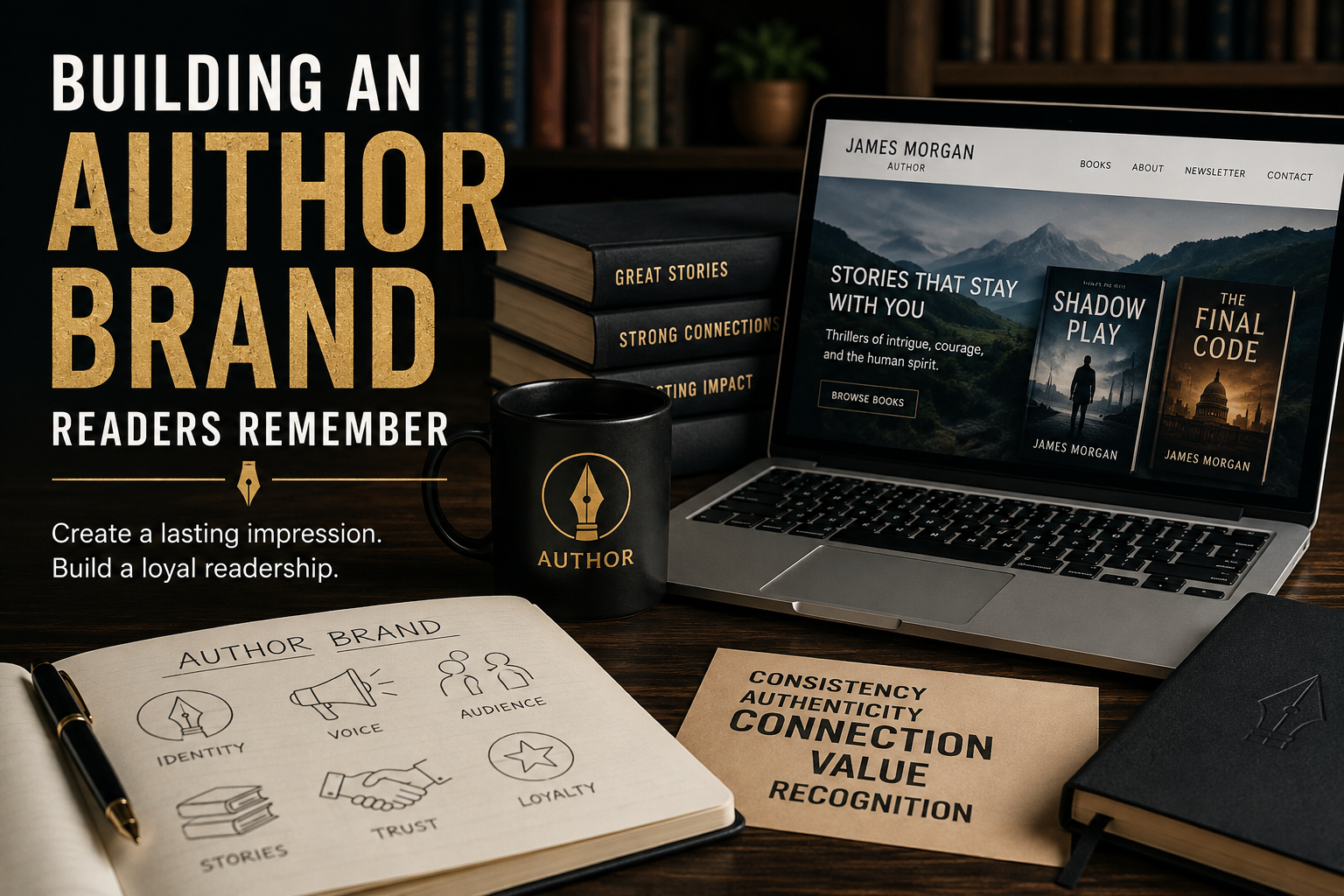

 Your books. Your brand. Your readers. One professionally managed author website.